AEtherion – Carbon Credit Platform
Aetherion explores how product design can make climate action more credible and accessible. The project examined why carbon markets often struggle with trust, transparency, and usability, then applied user-centered research to design a marketplace that aligns farmer incentives, corporate sustainability goals, and verification requirements. Research insights shaped the platform’s structure, transparency mechanisms, and early interface concepts, demonstrating how product design can translate a complex, opaque system into something people can understand and engage with.
Designing Trust in Carbon Markets
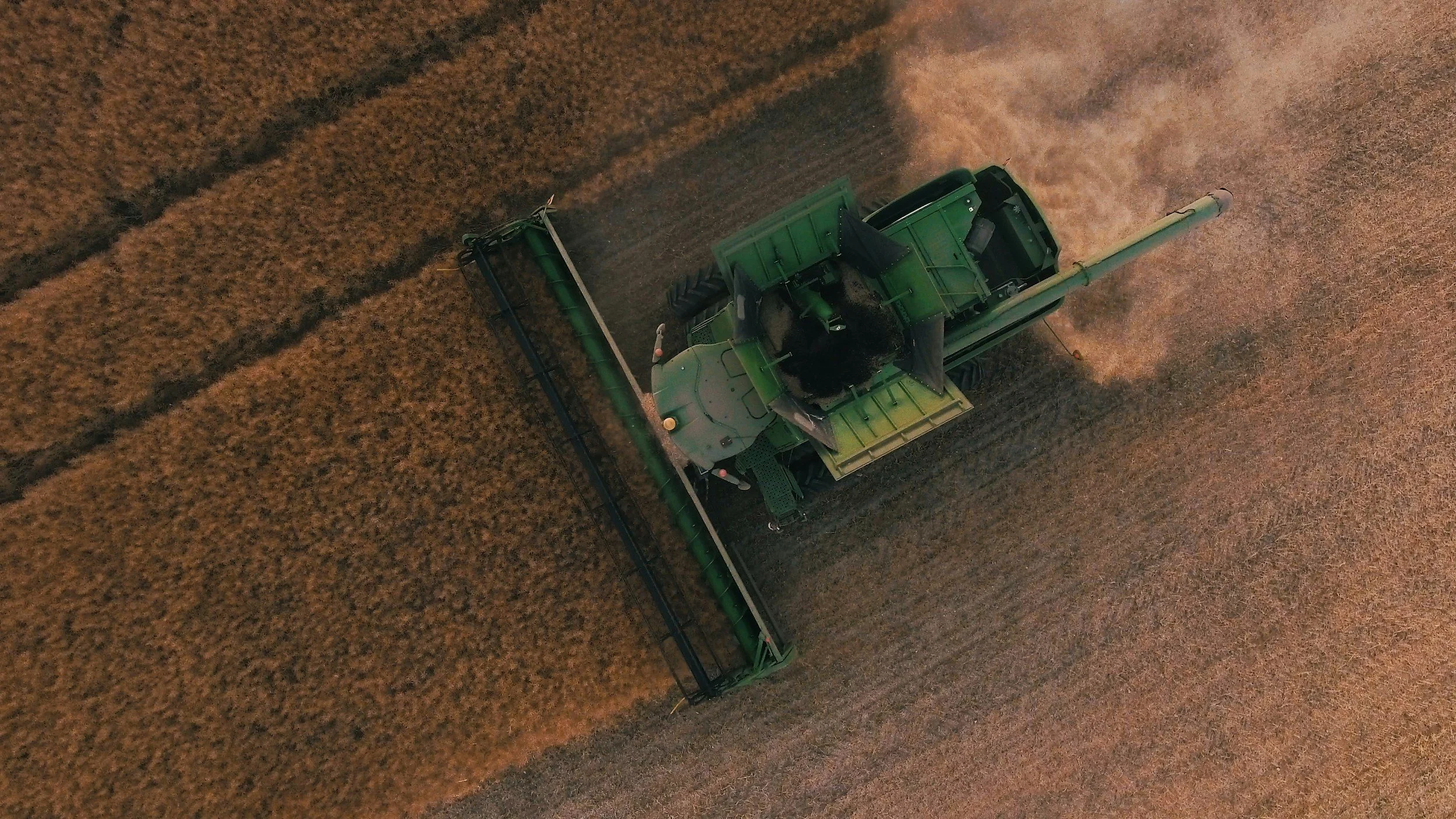
Carbon credit markets are difficult to navigate not because of a lack of demand, but because of how information, trust, and accountability are structured. For many participants, especially farmers and corporate buyers, the system is opaque, fragmented, and difficult to interpret. Verification processes are complex, data is often abstracted away from its source, and it can be hard to understand what a credit actually represents or why it should be trusted.
For farmers, participation requires navigating unfamiliar terminology, long timelines, and uncertainty around value and verification. For corporations, sustainability teams face a different challenge: evaluating credibility, managing risk, and justifying decisions to internal stakeholders. In both cases, users must make high-stakes decisions with limited clarity, relying on intermediaries rather than transparent systems.
From a product perspective, this creates a fundamental design problem. Trust is not simply a messaging issue, and transparency cannot be solved by adding more data. The challenge lies in designing a system that makes complex processes legible, aligns incentives across stakeholders, and supports confident decision-making without requiring users to become domain experts.
Aetherion approaches this challenge as a product design problem at the systems level, asking how research-driven structure, clear information flows, and thoughtful interface design can reduce friction and make participation in carbon markets more understandable and trustworthy.
User and Stakeholder Research
To understand where carbon markets break down, the team conducted user-centered research across the full ecosystem, including farmers, corporate sustainability leaders, and domain experts. Interviews focused on how participants currently engage with carbon programs, where confusion or mistrust arises, and what information is needed to make confident decisions at each stage of the process.
Farmer interviews surfaced concerns around uncertainty, delayed value, and limited visibility into how on-farm practices translate into verified credits. Many expressed hesitation driven not by lack of interest, but by unclear expectations and difficulty understanding verification requirements. These insights highlighted the need for clearer feedback loops and more transparent representations of progress and outcomes.
Corporate stakeholders emphasized a different set of challenges. Sustainability teams described difficulty evaluating credit quality, comparing projects, and communicating credibility internally. Trust was closely tied to traceability and verification, with a strong preference for systems that make data sources and methodologies visible rather than abstracted away.
Expert interviews and secondary research further informed constraints around verification, reporting, and regulatory standards. Together, these research efforts shaped a shared understanding of user needs, risks, and decision points across stakeholders. Rather than treating the marketplace as a simple transaction layer, the findings reframed it as an information and trust problem that needed to be addressed at the product level.
From Research to Product Definition
Insights from user and stakeholder research directly informed how the Aetherion platform was defined. Rather than treating the marketplace as a simple exchange of credits, the research revealed that trust, traceability, and interpretability were the core product requirements across stakeholders. This reframed the problem from enabling transactions to designing a system that supports confident decision-making.
For farmers, this meant designing participation around clarity and feedback rather than complexity. Research findings shaped assumptions about onboarding, data visibility, and long-term engagement, emphasizing the need for transparent progress tracking and clear explanations of how regenerative practices translate into verified outcomes. These insights informed how value is communicated over time, not just at the point of sale.
For corporate users, research shifted the focus toward verification and comparability. Sustainability teams needed to understand not only what they were purchasing, but how and why a credit was generated. This drove decisions around how verification data is structured, surfaced, and connected to individual projects, ensuring that credibility is built into the product rather than layered on afterward.
Across stakeholders, research highlighted the importance of reducing cognitive load in a highly technical domain. Product assumptions were tested against real user concerns, shaping platform requirements that prioritize clarity, transparency, and alignment of incentives. In this way, research did not simply validate ideas, but actively defined what the product needed to be.
Designing the Platform as a System
The Aetherion platform was designed as an information system first, rather than a transactional marketplace. Research showed that credibility and trust depend less on speed or volume and more on how clearly users can understand where data comes from, how it is verified, and what it represents. As a result, the platform structure prioritizes transparency, traceability, and clear information flows across all stakeholders.
At the center of the system is verified data. Instead of abstracting measurement and verification away from users, the platform surfaces key details about projects, methodologies, and progress over time. This approach supports corporate users who need to evaluate credit quality and justify decisions internally, while also giving farmers visibility into how their practices contribute to verified outcomes.
Different user groups interact with the platform in different ways, which informed a layered design approach. Farmers, corporate buyers, and other stakeholders require distinct views into the same underlying system, each emphasizing the information most relevant to their goals and risks. Designing these perspectives required careful consideration of what to surface, what to simplify, and what to keep accessible without overwhelming users.
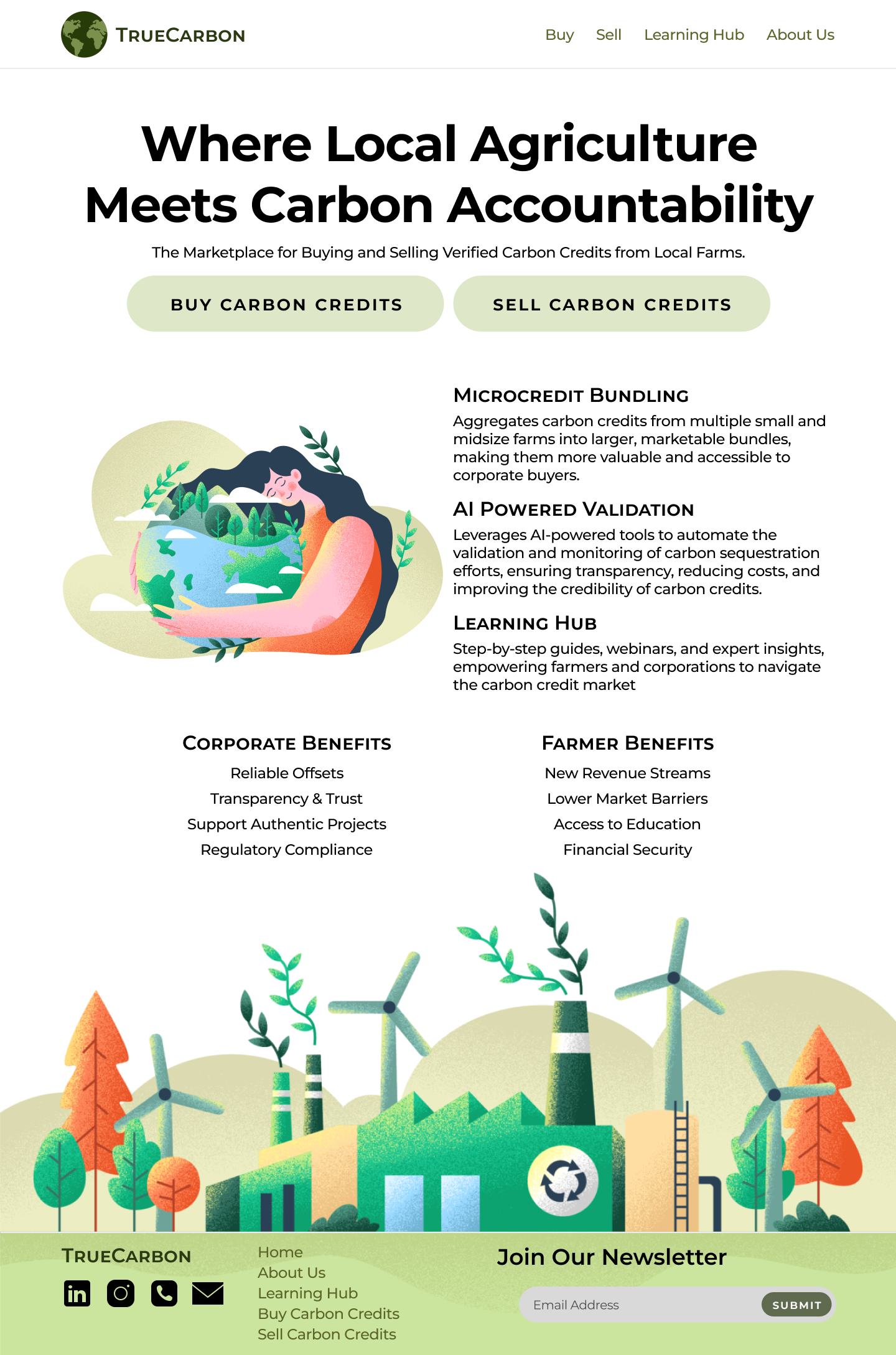
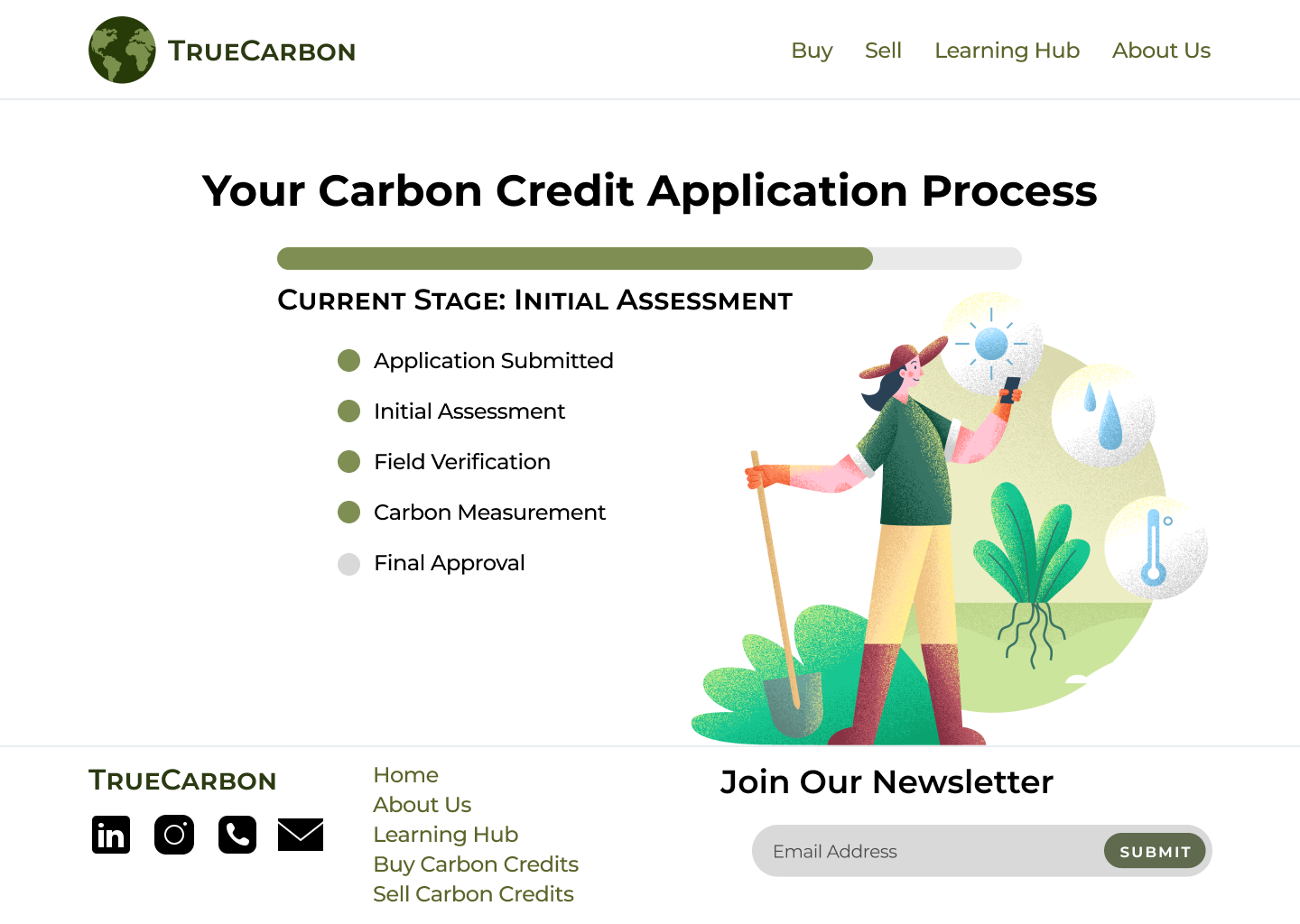
Early interface concepts were developed in Figma to articulate how the platform might function from a user’s perspective and to pressure-test assumptions about information hierarchy, trust, and flow. These screens were not intended as final UI designs, but as exploratory artifacts used to reason through complex interactions such as onboarding, carbon credit validation, and value communication across different user groups.
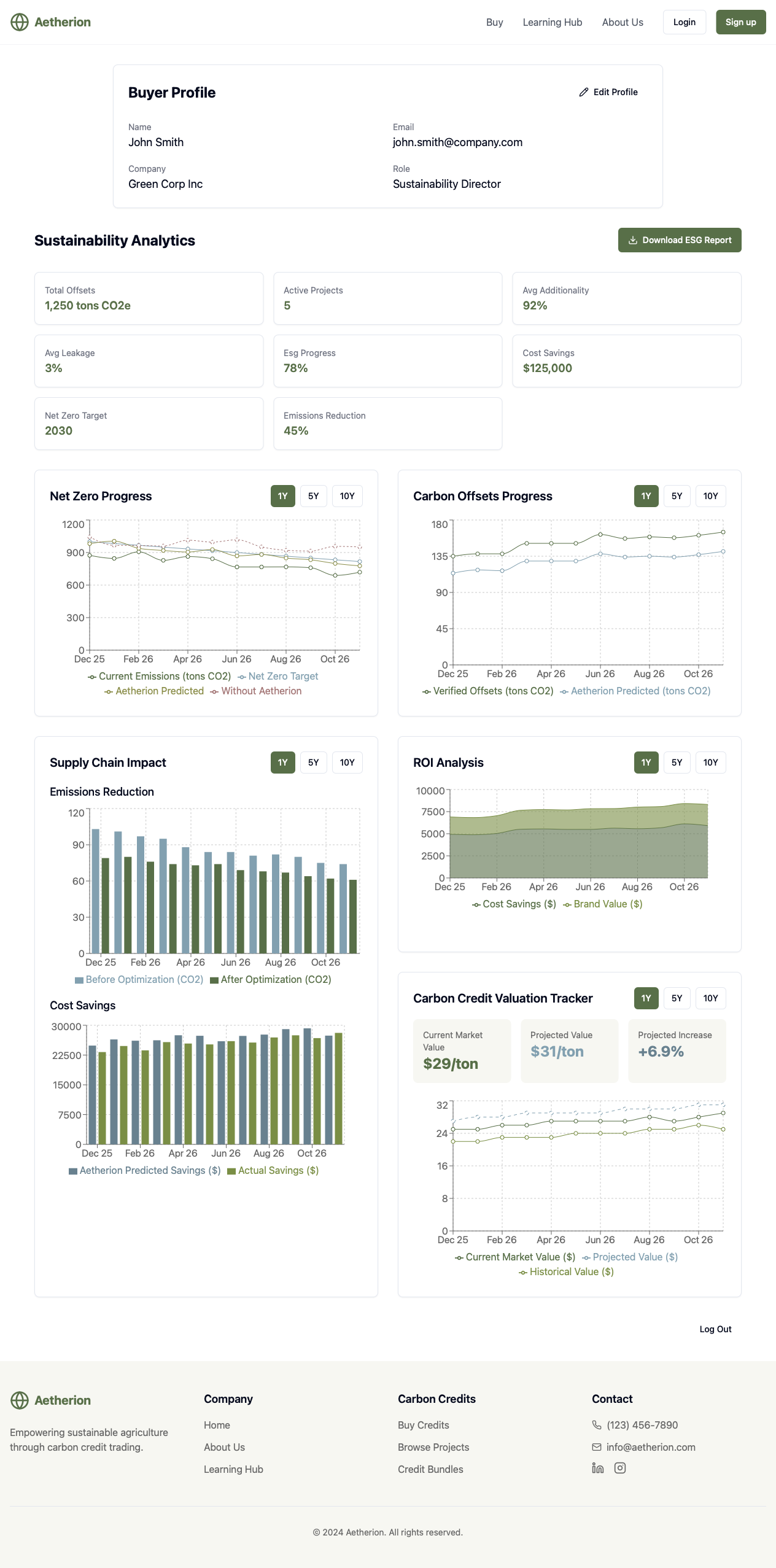
To explore how the marketplace might function end to end, a high-level interactive prototype was built using Lovable across both farmer and buyer experiences. This version focused on modeling core workflows, data visibility, and role-based dashboards rather than refining visual details. The prototype helped surface questions around trust, transparency, and user understanding across both sides of the marketplace.
A live version of the prototype is available for exploration here.
Together, these explorations frame the platform as a connective layer between data, verification, and decision-making. The design emphasizes legibility and trust over novelty, reflecting the needs of a domain where clarity and credibility are essential.
Building Aetherion surfaced how deeply product design and business strategy are intertwined, especially in complex, trust-sensitive domains. Early research and prototyping revealed that the primary challenge was not feature complexity, but credibility. Users needed to understand not only what the platform offered, but why they should trust the data, the verification process, and the marketplace itself.
Outcomes & Design Learnings
Through iterative exploration, the team learned that clarity often mattered more than sophistication. Simplifying workflows, making assumptions explicit, and foregrounding verification logic helped reduce cognitive load for both farmers and buyers. Design decisions increasingly centered on legibility, traceability, and reassurance rather than visual novelty.
This project reinforced the importance of using design artifacts as thinking tools. Wireframes, dashboards, and prototypes were used to test assumptions, align stakeholders, and surface unanswered questions long before technical implementation. Rather than treating design as a final layer, it functioned as a bridge between research, strategy, and execution.
Ultimately, Aetherion demonstrated how product design can shape not just interfaces, but the structure and credibility of an emerging marketplace. The work emphasized systems thinking, cross-functional collaboration, and the role of design in making complex economic and environmental concepts accessible to real users.