Planit is a cross-device productivity app designed to support how students actually study. The project focused on creating a cohesive experience across smartphone and smartwatch interfaces, enabling students to plan coursework, book study rooms, start focus timers, and track academic tasks without breaking their flow. Design decisions centered on information hierarchy, interaction simplicity, and role-appropriate device use, ensuring that the product fits naturally into existing study routines rather than demanding constant attention.
Planit – Study tracker
Studying Across Devices Without Friction
Students juggle planning, studying, and coordination across multiple tools and contexts. While phones are often used for scheduling and task management, they can also become a source of distraction during focused work. At the same time, smartwatches offer quick access and glanceable interactions, but are rarely integrated meaningfully into academic workflows.
The challenge was not simply to design another productivity app, but to create a system that works across devices in a way that feels intentional. Students need to plan coursework, reserve study spaces, and track progress without interrupting their focus or constantly switching tools. When these actions require too much effort or attention, even well-designed features go unused.
From a product design perspective, this raised a core question: how can responsibilities be distributed between a phone and a smartwatch so that each device supports studying rather than competing with it? Planit approaches this problem by designing role-specific interactions, using the phone for planning and organization, and the watch for lightweight actions that help students stay in flow.
Understanding Students’ Study Routines & Constraints
Early interviews and persona work revealed that students already rely on a patchwork of tools to manage their academic lives, including calendars, task lists, and timers. Despite this, many still struggle to follow through on planned study time. The breakdown was rarely about motivation. Instead, it stemmed from friction between planning and execution. Students described carefully scheduling study sessions earlier in the day, only to feel overwhelmed, distracted, or unsure where to start when the time actually arrived.
A recurring theme was context switching. Planning typically happened on a phone or laptop, often hours before studying began, while execution occurred in different environments such as libraries, dorms, or shared study spaces. When it was time to focus, students did not want to re-engage with dense interfaces, long task lists, or multiple decisions. They wanted a clear signal to begin, minimal interaction, and reassurance that they were working on the right thing.
Interviews also highlighted the role of wearables as an underutilized opportunity. Students who owned smartwatches already used them for notifications, timers, and quick checks, but not as intentional study tools. This pointed to a design opportunity to separate cognitive labor across devices. The phone could support planning, organization, and setup, while the watch could support in-the-moment focus, time awareness, and lightweight control during active study sessions.
Together, these insights reframed Planit as more than a productivity app. The goal became to design a system that fits naturally into students’ existing routines by reducing friction at the moment of action. Rather than asking users to manage more information, the product focuses on helping them transition smoothly from intention to focused work across the devices they already use.
Designing a Cross-Device Study System
Planit was intentionally designed as a two-part system, with the phone and smartwatch supporting distinct but connected roles in the study process. Rather than duplicating functionality across devices, the design assigns responsibility based on cognitive load and context of use. The phone acts as the planning and setup surface, while the watch supports execution and sustained focus.
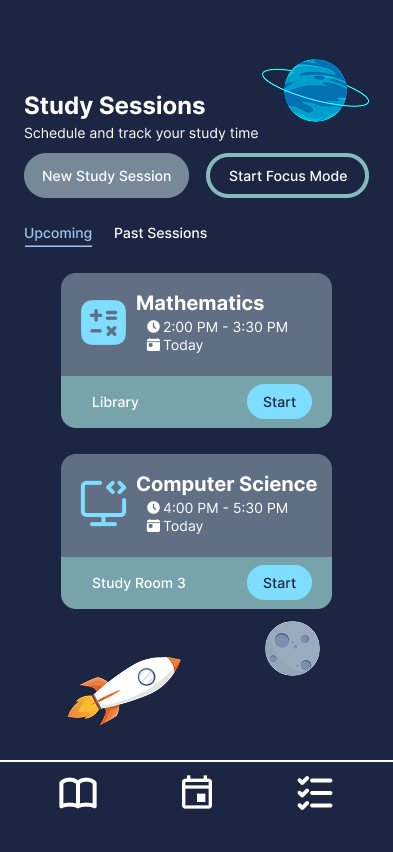
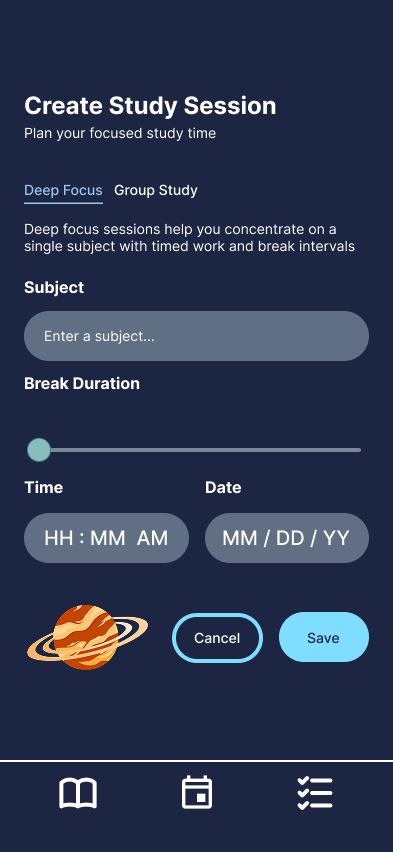
On the phone, the interface emphasizes clarity and preparation. Students can create study sessions by selecting a subject, time window, and break structure, allowing them to externalize planning decisions in advance. Study sessions appear as simple, glanceable cards that communicate what to work on, where, and when, reducing ambiguity when sessions begin. Task management and calendar views provide broader academic context, but are intentionally separated from focus mode to avoid overwhelming users at the moment of action.
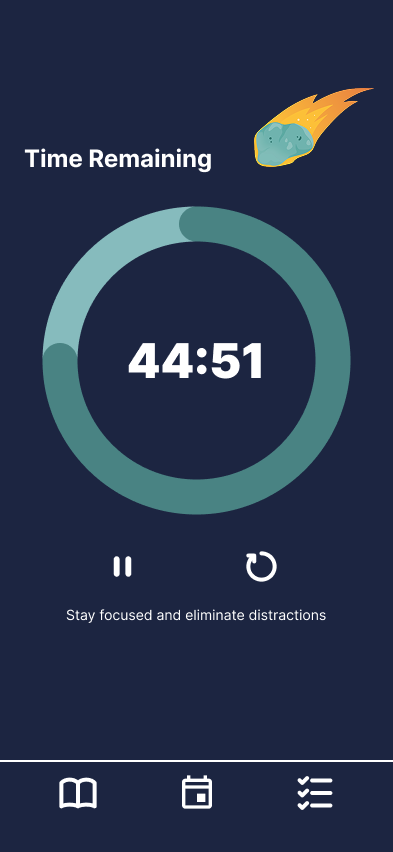
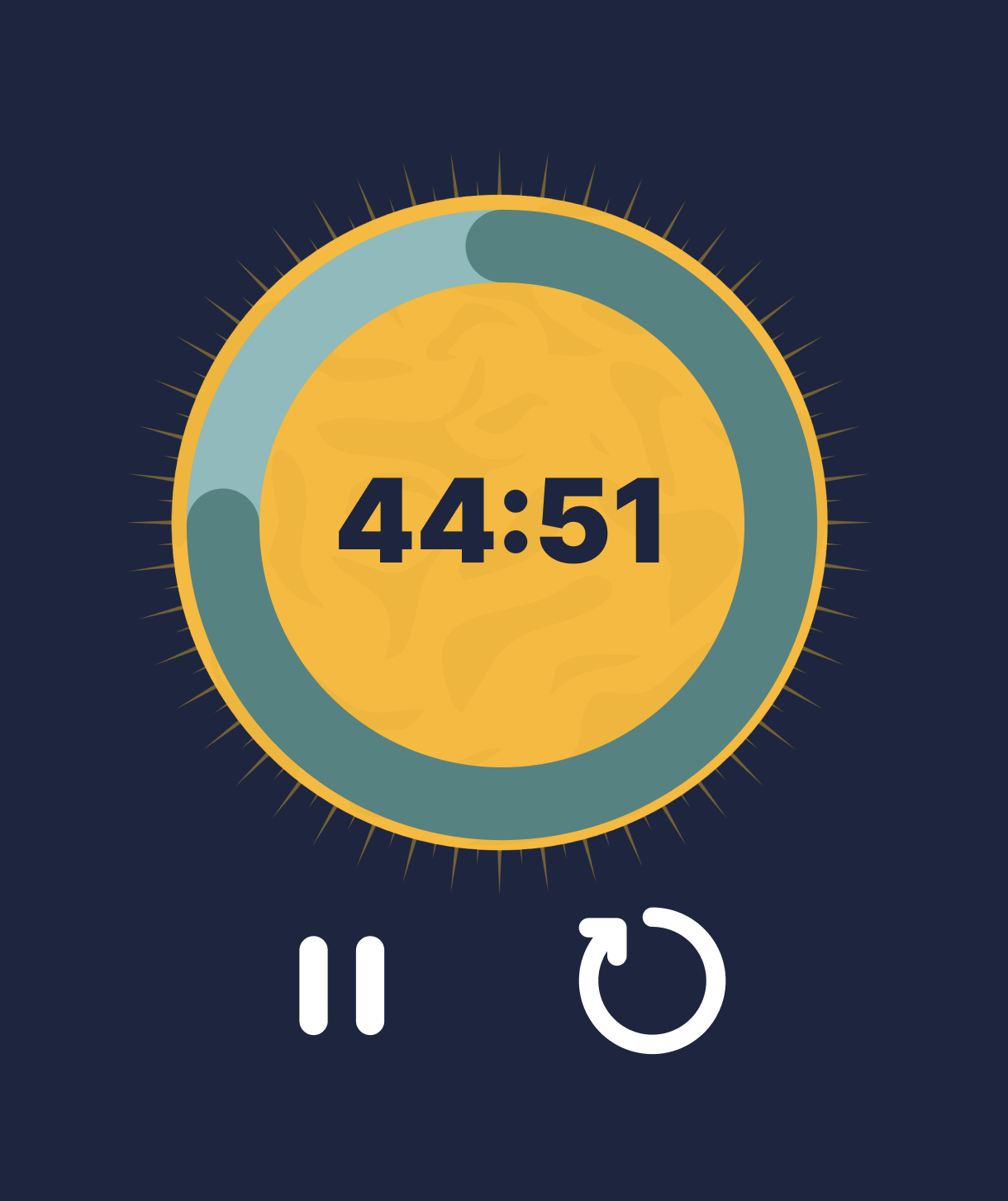
Once a session begins, interaction shifts to focus mode, where the design minimizes choice and visual noise. The circular countdown timer communicates progress through time rather than tasks, reinforcing a single objective: stay focused until the session ends. Controls are limited to pause and reset, ensuring that interaction supports regulation rather than distraction.
The smartwatch experience extends this focus-first approach. Watch screens strip the interface down to essential information, showing the active subject, remaining time, and a single call to action to begin. During focus mode, the watch functions as a peripheral companion, allowing users to check progress or pause without reaching for their phone. This reduces unnecessary context switching while maintaining a sense of control and awareness.
By distributing functionality across devices, Planit aligns with how students naturally move through their environments. Planning happens when there is time and attention to spare, while execution is supported through lightweight, ambient interactions. This system-level approach treats focus as a state to be protected, not a behavior to be constantly managed, and demonstrates how thoughtful cross-device design can reduce friction and support sustained engagement.

Interface Decisions & Visual Language
The interface design for Planit prioritizes focus, clarity, and ease of use over dense information or constant feedback. Visual elements were intentionally restrained to reduce cognitive load and help students stay present during study sessions rather than feeling pressured to manage tasks continuously.
Color and hierarchy were used to guide attention rather than compete for it. The space-themed visual language reinforces a sense of separation from everyday distractions, creating a distinct mode for studying that feels intentional and immersive. Primary actions are emphasized through size and placement, while secondary information remains accessible but unobtrusive.
Interaction patterns were designed to minimize decision-making at critical moments. During focus sessions, the interface surfaces only what is necessary, using time as the dominant signal rather than task lists or progress metrics. This reduces the urge to multitask and supports sustained engagement without requiring frequent interaction.
Across both phone and watch interfaces, consistency in layout, iconography, and motion helps the system feel unified despite differences in screen size and interaction constraints. The result is an experience that feels supportive rather than demanding, allowing Planit to blend naturally into students’ study routines while maintaining a clear and intentional product identity.
Reflection
Planit reinforced the importance of designing systems that respect users’ attention rather than compete for it. Working across phone and smartwatch interfaces highlighted how thoughtful distribution of responsibility between devices can reduce friction and support focus in everyday routines.
This project also emphasized the value of simplicity in interaction design. By limiting choices during active study sessions and using time as the primary signal, the interface encourages sustained engagement without over-managing behavior. Designing for constraint, especially on the smartwatch, sharpened decisions around hierarchy, feedback, and control.
If continued, the project could explore deeper integration with institutional systems such as campus room availability or learning platforms, as well as personalization based on individual study patterns. Overall, Planit reflects a product design approach that prioritizes clarity, intentionality, and fit within real student workflows.